
A Book to Understand the
Fear of Tomorrow
Is Coming Soon
Imagining tomorrow is part of our everyday lives. We hope for the best, anticipate the worst, and make decisions to prepare for what lies ahead. But when this anticipation becomes a constant source of worry, it can trap us in what we call the fear of the future.
The French edition will be released in January 2027.
Leave your email address to be notified as soon as the book is released.
Volume I
From Listening to Diagnosist
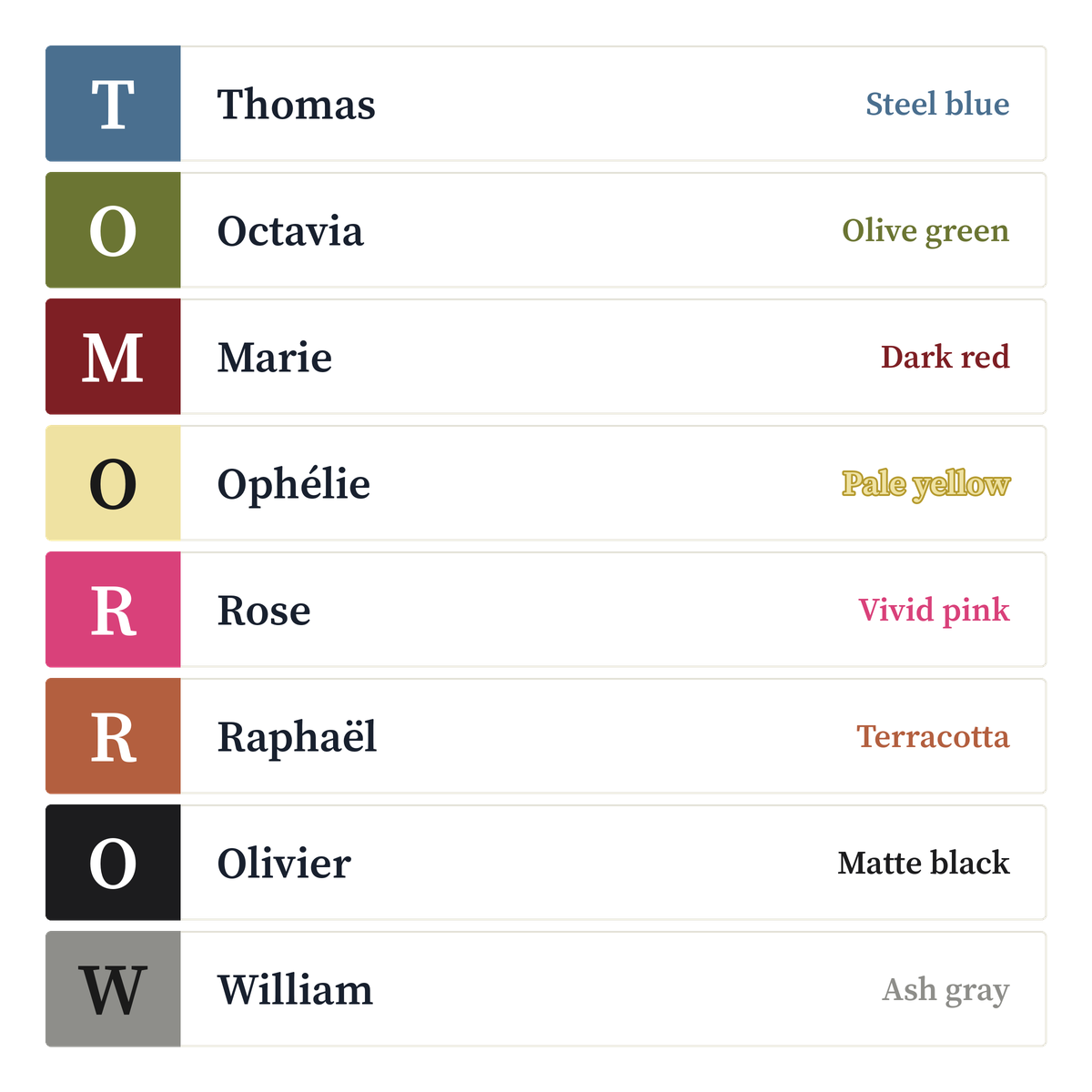
The Pathologization of the Future in Eight Colors · From Diagnosis to the Clinical DimensionEight patients, whose initials spell the word TOMORROW, share their life stories, each story taking on a particular color that reflects its dominant emotional tone.
Thomas, a respected lawyer convinced that the worst is approaching, remains powerless in the face of the catastrophes his imagination foretells. Octavia has always lived for others and dared to go into exile, yet every step toward the future feels like a betrayal of her own identity. Marie turned family shame into success, until a physical collapse threatened her future. Ophélie has escaped death twice, but lives in terrifying anticipation of a third tragedy. Rose retreated into the shadows after a humiliating experience that left her dreading every glance and every encounter. Raphaël, a mechanic haunted by an accident for which he holds himself responsible, monitors his heart as though it were an engine on the verge of breaking down. Olivier, abandoned by his mother, fears every new attachment and retreats into solitude, convinced that all love eventually disappears. William, having lost his friends, his passions, and his plans, slowly fades from his own existence until he can no longer imagine a future at all.
Despite their distinct diagnoses, these eight life trajectories converge on a shared clinical dimension: future-oriented anxiety.
Analyzing their narratives reveals several manifestations of anxiety involving the ways people imagine and evaluate the future, the strategies they use to protect themselves against anticipated threats, the consequences for everyday life, and their ability to keep moving toward tomorrow.
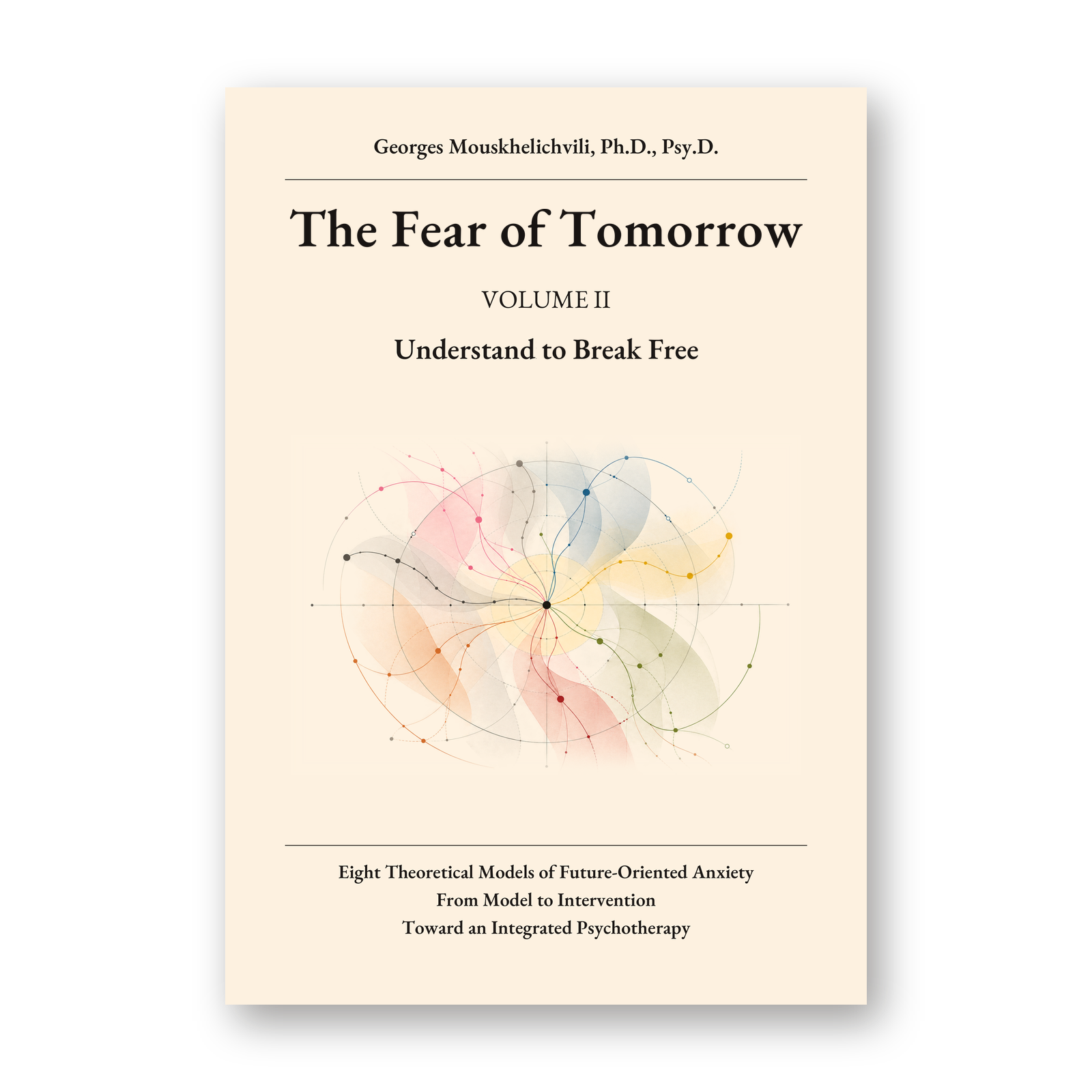
Volume II
Understand to Break Free
Eight Theoretical Models of Future-Oriented Anxiety · From Model to Intervention · Toward an Integrated Psychotherapy
This second volume presents eight theoretical models, each developed from one of the TOMORROW clinical profiles, to understand how future-oriented anxiety (FOA) takes shape, is maintained, and can be transformed.
Each model highlights specific psychological mechanisms, ranging from the repeated anticipation of threats to the loss of the ability to envision oneself in the future. Examining these models together reveals shared mechanisms as well as essential differences, allowing for a deeper understanding of each individual's unique experience and helping guide psychotherapeutic interventions.
Each theoretical model then proposes a psychotherapeutic approach tailored to the unique experience of the individual it describes.
Therapeutic work thus involves learning to live with uncertainty, acting in accordance with one's values, inhabiting one's body again, working through trauma, facing the judgment of others, letting go of repeated checking, learning to trust again, or gradually rediscovering the drive to act in everyday life.
In a world marked by accelerating rhythms of life, uncertainty, and the rapid rise of artificial intelligence, these approaches converge toward a common therapeutic framework aimed at alleviating distress, modifying the mechanisms that sustain anxiety, and rebuilding an open future.
For clinicians, researchers, and anyone seeking to understand why the fear of the future takes hold and how to break free from it.
Eight Colors of Tomorrow
Color distills the clinical interpretation of each portrait through four key dimensions: the feared object, the strategy adopted in response, the role of the body, and the profile's evolution over time. The base color establishes the overall emotional tone, while its particular shade adds further nuance.
Each color functions as a psychological tone, a way of characterizing the experience of anticipation, and gives access to what the body feels first and what consciousness can put into words only afterward.
Tomorrow is the smallest unit of the future that the human mind inhabits chronically: close enough to appear controllable, yet uncertain enough to generate anxiety, until it becomes a real threat.
About The Author
Georges Mouskhelichvili holds two doctoral degrees in psychology (Ph.D. and Psy.D.) from the Université du Québec à Montréal (UQAM).
His clinical practice combines humanism, empathy, and scientific rigor in an approach aimed at understanding the difficulties that hinder people's ability to envision their future and helping them rediscover a horizon open to new possibilities.
Georges Mouskhelichvili, Ph.D., Psy.D., has practiced psychotherapy for more than twenty years, with a particular focus on understanding and treating anxiety disorders, especially their anticipatory dimension and their relationship to the future.
This book is the result of his clinical experience and an in-depth exploration of the mechanisms underlying fear and anxiety.
Contact the Author